
Reviewed · LOVćEN & NJEGUšI MOUNTAIN TOURS
Cetinje City Tour
Cetinje feels like a museum you can walk through. This one-hour city tour puts you in the old royal capital of Montenegro, with monuments tucked under the huge Lovćen mountain and a town-center that’s easy to read on foot.
I like how the route hits top landmarks fast, so you don’t wander in circles. I also love that you get an expert English licensed guide (Filip, in at least one well-reviewed tour), who helps the buildings make sense instead of feeling like random stops.
One thing to consider: it’s a short, walking-focused visit, and bad weather can make the experience less fun. Also, some sites may have rules about photos, so don’t plan on filming everything inside.
In This Review
- Key highlights at a glance
- Cetinje: a one-hour walk that teaches you how to look
- Price and value: what $115.50 buys you (and what it doesn’t)
- Stop 1: Cetinje Monastery and Ćipuri church (a strong start)
- Stop 2: Njegoš Museum Biljarda (where power turns into place)
- Stop 3: Museum of King Nikola (1867 setting, national story)
- Stop 4: Presidential Palace, Royal Theater Zeta house, and Ivan Crnojević
- The walking pace: how to make the most of one hour
- Weather and practicalities: when the town works, and when it doesn’t
- Who should book this Cetinje city tour?
- Should you book it? My take on the decision
- FAQ
- How long is the Cetinje City Tour?
- Where does the tour start and end?
- What is included in the price?
- What is not included?
- Are any admissions free during the tour?
- Is this tour private and can I bring a service animal?
Key highlights at a glance
- Old royal capital in one loop: you cover the main “museum city” feel without needing a car
- English licensed guide: explanations that connect the churches, museums, and palaces
- Cetinje Monastery + Ćipuri church: the spiritual start of the tour
- Biljarda and Njegoš’s legacy: a residence tied to Petar II Petrović Njegoš
- King Nikola’s Museum: history staged in a building dating to 1867
- Palace-era streets: Presidential Palace, Royal Theater Zeta house, and the Ivan Crnojević monument
Climb higher: more of Lovcen, Njegusi and the switchbacks
- Cetinje City Tour★ 4.5 · 4 reviews
- Kotor’s serpentines, Skadar Lake & Horseshoe Bend of Montenegro★ 5.0 · 3 reviews
Cetinje: a one-hour walk that teaches you how to look
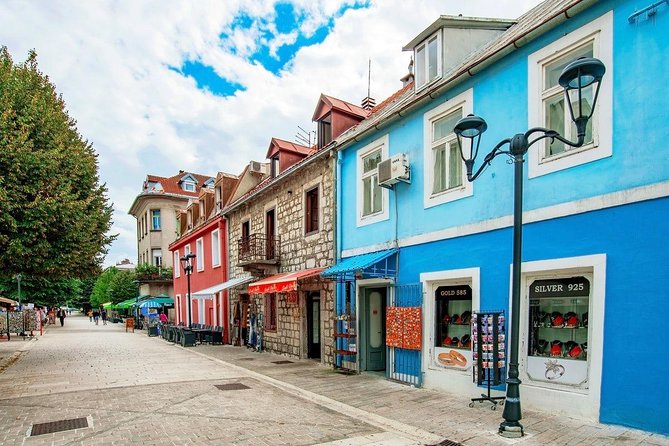
Cetinje is the former capital of Montenegro, the kind of place where the streets and buildings act like captions under a photo. Founded in the 15th century, it became the cultural center of Montenegrin life, and later—during the time of King Nikola—it attracted foreign embassies, which helped shape the city’s unique look.
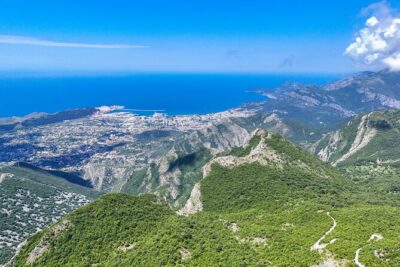
The charm here isn’t one big headline monument. It’s the way everything sits close together: promenades, small museums, and classic architecture from the 18th and 19th centuries. Then you add the setting: Cetinje sits in a valley surrounded by mountains, with Lovćen looming over the whole scene. Even when you’re moving quickly, the backdrop keeps it feeling real.
The tour is about one hour, and it’s set up for you to get oriented fast. If you’re short on time in Montenegro, or you’d rather spend your energy on guided viewing than planning, this format works.
Price and value: what $115.50 buys you (and what it doesn’t)
The price is $115.50 per person for an English licensed guide plus a tourist tax. For a one-hour route, that’s mainly paying for two things: someone local to point out what matters, and the time-saving convenience of moving from stop to stop without guesswork.
What’s not included:
- transfer from your accommodation to Cetinje
- entrance fees for some local sights
- food and drink
- other personal costs
- travel health insurance (optional)
So the value depends on your starting point. If you’re already in or near Cetinje, you’ll feel the price more as “guided time.” If you’re further away, transport can stretch your total day costs. The tour also includes some stops with free admission, but at least two museum stops are not included in the package price—so budget for those tickets separately.
Stop 1: Cetinje Monastery and Ćipuri church (a strong start)
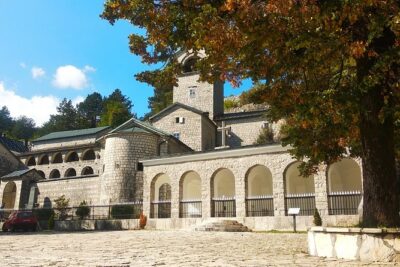
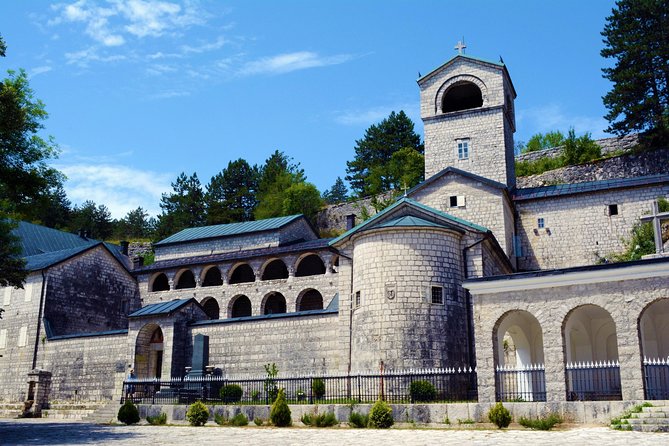
The tour begins at Cetinje Municipality and quickly steers you toward the heart of the city’s identity: St. Peter of Cetinje, also known as Cetinje Monastery.
This is the town’s most important monument, built in 1701 and dedicated to the birth of the Virgin. When you visit, the point isn’t just ticking off a church. It’s seeing how religion and national identity overlap here. In Cetinje, the monastery isn’t isolated. It’s the kind of landmark that makes the rest of the city’s architecture feel like part of the same story.
You’ll also visit Ćipuri church. It’s a shorter add-on stop, but it helps you understand how the spiritual landscape sits inside the walking rhythm of the town.
Timing here is about 10 minutes, and admission for this portion is listed as free. If you’re the type who normally rushes, try not to. The monastery gives your eyes a reference point—once you’ve seen that, the royal-era buildings later feel less random.
Stop 2: Njegoš Museum Biljarda (where power turns into place)
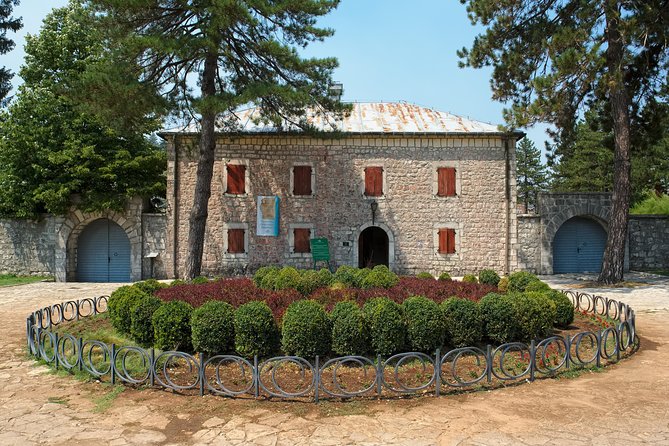
Next up is Njegoš Museum Biljarda, the former residence of Petar II Petrović Njegoš. Biljarda matters because it isn’t just a museum building—it’s tied to one specific person and his role in Montenegrin history. That makes the visit feel more focused than a general “state museum” stop.
You’ll have around 10 minutes here, which is short, but that’s the tradeoff of an hour tour. The upside is that you don’t get museum-fatigue. The guide’s job is to show you the key ideas quickly so you can decide if you want to come back later on your own for longer time.
Admission for Biljarda is not included, so if you’re traveling on a tight budget, factor that into your planning. If you enjoy architecture and the idea of how rulers lived day-to-day (not just how they led), Biljarda is one of the more rewarding stops on the route.
Stop 3: Museum of King Nikola (1867 setting, national story)
After Biljarda, the tour moves to the Museum of King Nikola. The museum is housed in a building from 1867, which gives the visit a “history with a body” feel. Instead of learning about the king only through dates, you see the time period through the setting itself.
This stop is also about 10 minutes, with admission not included.
King Nikola’s era is important because it’s when Cetinje’s city image was shaped further, including the presence of foreign embassies built in the city. Even if you don’t have time to follow every historical thread, the museum stop gives you a framework for why Cetinje looks the way it does.
Practical note: in some palace-type spaces, photos can be restricted. One review specifically mentioned that you can’t take photos inside the palace. For museum interiors, you might find similar rules. If photography matters to you, keep your camera handy for exterior views and follow posted instructions inside.
Stop 4: Presidential Palace, Royal Theater Zeta house, and Ivan Crnojević
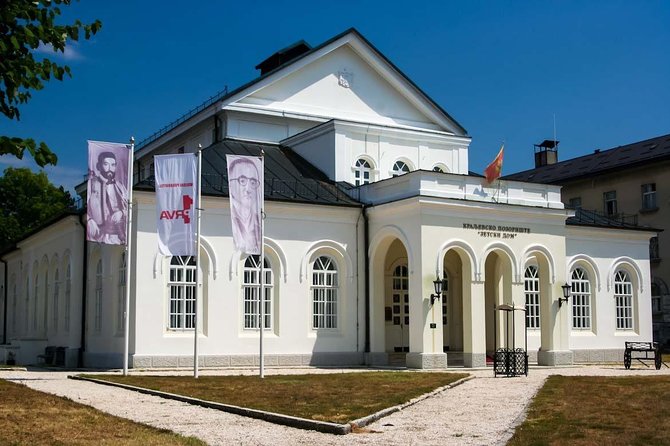
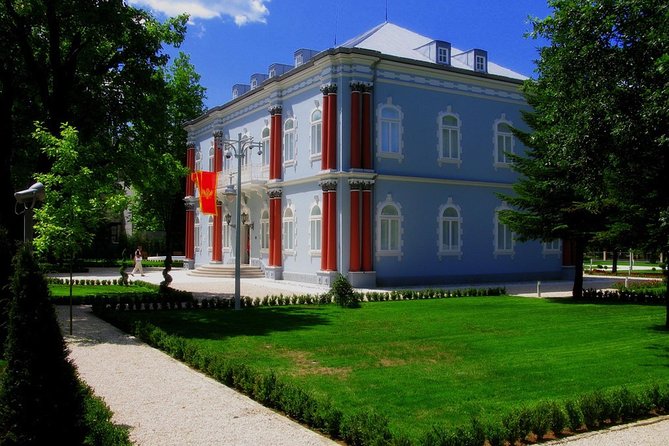
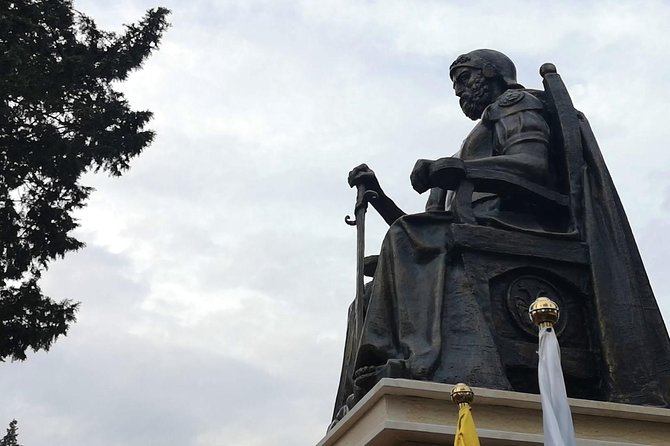
Then the tour shifts into the “walk the main story” part of Cetinje. You’ll see the Presidential Palace, the Royal Theater Zeta house, and the monument of Ivan Crnojević, who was a Zeta ruler and founder of Cetinje. After that, you’ll take a walk along the main street.
This section is where the tour can feel especially satisfying if you like city atmosphere. You’re not just staring at walls—you’re connecting roles: rulers, culture, and national identity. The Presidential Palace is a clear symbol of state power. The Royal Theater Zeta house adds the arts angle, reminding you that culture wasn’t a side project—it was part of the city’s self-image.
The Ivan Crnojević monument adds a different perspective. He’s tied to the founding of Cetinje, so when you see the statue while you’re already looking at royal-era buildings, the city’s timeline starts to feel chronological instead of abstract.
Timing for this final leg is roughly 30 minutes, and admission here is listed as free for the Cetinje portion. It’s also where weather matters most. If it’s raining, walking on wet pavement can turn a cultural stroll into a sprint.
The walking pace: how to make the most of one hour
This tour is short on purpose: you’re getting a “best of” route and an orientation to Cetinje’s layout. That means:
- You’ll move at a guided pace.
- You won’t linger long at any single interior.
- The guide’s explanations matter even more, because they’re doing the heavy lifting.
If you tend to read every plaque, you might feel the time pressure. If you like a quick but well-aimed route, you’ll probably feel you’ve gotten your bearings fast—without having to plan stops yourself.
In at least one review, the tour was described as touching many museums in a short span. That’s exactly the strength of the format: multiple cultural stops without turning your day into a museum marathon.
Also: Cetinje isn’t all postcard-perfect. One review mentioned that parts of the wider city can feel dated, and you may see less cared-for areas outside the main center. That doesn’t ruin the visit—it’s part of reading real cities—but it’s good to have realistic expectations.
Weather and practicalities: when the town works, and when it doesn’t
The tour requires good weather. If it’s canceled due to poor weather, you’re offered a different date or a full refund. That’s a fair setup for a walking experience.
If skies are bad, the biggest impact is emotional, not logistical. Cetinje is built for strolling: stone surfaces, promenades, and views under Lovćen. Rain doesn’t stop you from seeing things, but it can reduce the fun factor and slow down how much you enjoy the main street walk.
Dress matters in a simple way: you’ll be around churches and monasteries, so follow site rules and keep things respectful. In practice, that means be prepared for rules you might be asked to follow and go with comfortable walking shoes.
Who should book this Cetinje city tour?
This is a great fit if:
- you want a focused introduction to Cetinje’s royal-era highlights
- you enjoy museums but prefer a guided hit list over solo wandering
- you’re short on time and want to see major monuments in about one hour
- you like walking through a small town where architecture and history are visible close up
You might want to skip or adjust your expectations if:
- you’re traveling with someone who hates walking or moves slowly
- you need lots of time inside museums (this tour is time-tight by design)
- you’re expecting a deep, hours-long museum day with long interior sessions
Should you book it? My take on the decision
I’d book this tour if you’re the kind of traveler who likes learning in motion—standing in the right spot and letting a guide connect the dots between buildings and meaning. It’s priced like a convenience and interpretation package, not a cheap DIY stroll, and for a one-hour guided loop, that’s often a smart deal.
I’d hesitate only if you already plan to spend a full day in Cetinje and you don’t care about quick orientation. In that case, you might prefer solo time and choose entrances at your own pace.
If you’re on a tight schedule in Budva and you want one clear, efficient cultural outing, this tour is the kind of plan that keeps your day from turning into “we’ll see what’s around.”
FAQ
How long is the Cetinje City Tour?
The tour is approximately 1 hour.
Where does the tour start and end?
It starts at Cetinje Municipality, Montenegro, and ends back at the same meeting point.
What is included in the price?
The price includes a licensed tourist guide in English and a tourist tax.
What is not included?
Entrance fees for localities, transfer from your accommodation to Cetinje, food and drink during the tour, other non-program costs, and travel health insurance (optional) are not included.
Are any admissions free during the tour?
Yes. The Cetinje Monastery portion (including Ćipuri church) is listed as free, and the Cetinje main part at the end is also listed as free. Biljarda and the Museum of King Nikola are listed as admission not included.
Is this tour private and can I bring a service animal?
It’s private, meaning only your group participates. Service animals are allowed, and most travelers can participate.
More Tours in Budva
More Tour Reviews in Budva
Up the Mountain: More Lovcen & Njegusi
Just in: more Budva boats, walls and mountain roads
- Kotor’s serpentines, Skadar Lake & Horseshoe Bend of Montenegro
★ 5.0 · 3 reviews - Budva City Tour
★ 5.0 · 3 reviews - Private Tour: Montenegro Day Trip from Dubrovnik
★ 5.0 · 3 reviews - Cetinje City Tour
★ 4.5 · 4 reviews - Private Transfer from Budva to Podgorica Airport and city
★ 5.0 · 4 reviews
Lovćen & Njeguši Mountain Tours, compared.
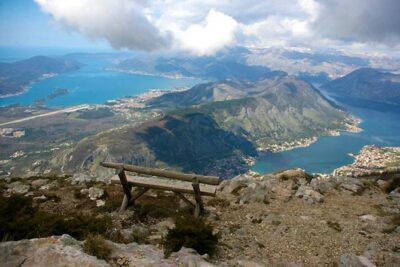 ★ 5.0Great Montenegro Tour-Lovcen NP,Mausoleum Lovcen,River of Crnojevic,Sveti StefanFrom $89637 reviews
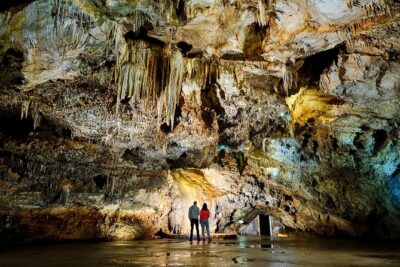 ★ 5.01-Hour Guided Lipa Cave Adventure in MontenegroFrom $20342 reviews
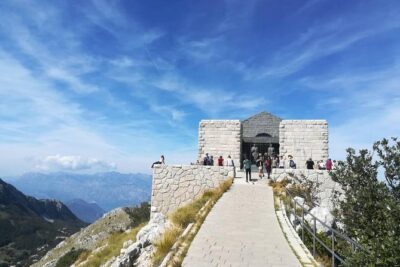 ★ 5.0Private National Park Lovcen with food and wine tastingFrom $21033 reviews
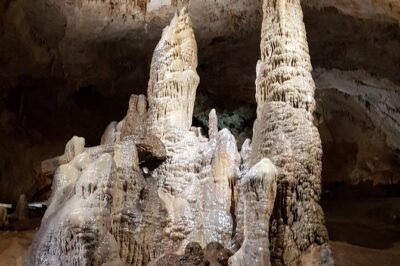 ★ 5.0National Park Lovcen and Lipa Cave (Private tour)From $24717 reviews
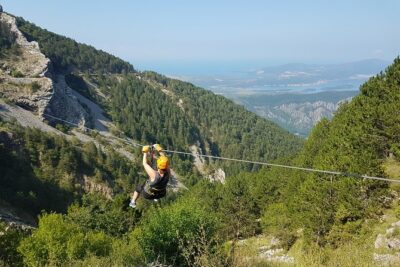 ★ 5.0Hiking downhill from Krstac to Kotor, visit San Giovanni fortressFrom $14215 reviews
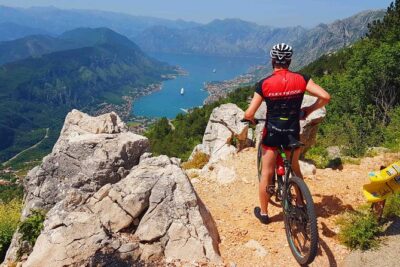 ★ 5.0Cable car + Electric MTB from Njegos Mausoleum to Kotor bayFrom $19811 reviews
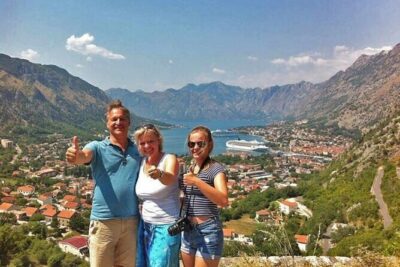 ★ 5.0Lovcen – Symbol of Montenegrin Freedom including Budva & CetinjeFrom $27311 reviews
 ★ 5.0Wine tasting and magical tour from Kotor, Budva, Tivat (Lovcen,Skadar lake)From $30110 reviews
Browse the lists this tour appears in