
Reviewed · KOTOR FOOD & WINE TASTING TOURS
Handmade Pasta Cooking Class with Italian Chef in Montenegro
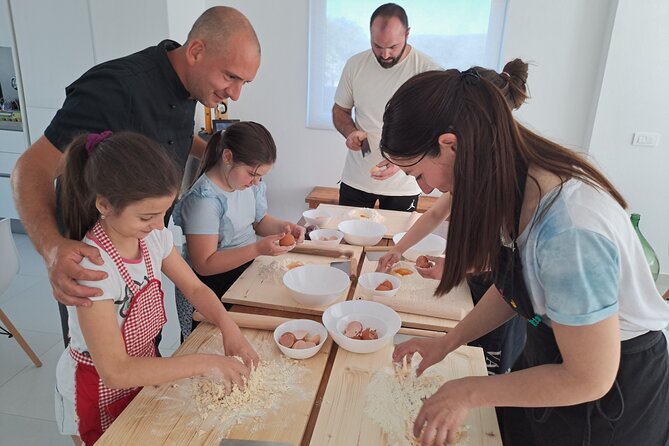
Handmade pasta is one of those foods you can taste with your hands. In Kotor, this class puts you in chef Giuseppe’s kitchen at a villa in Đuraševići, where you’ll learn the moves that turn flour and eggs into real Italian comfort food.
I love the hands-on cooking part, from mixing and rolling dough to cutting and shaping your own pasta. I also like the payoff: your meal ends with a tasting of what you made, plus a glass of local Montenegrin wine and a printed recipe you can actually use later.
One thing to keep in mind is the time: you’ll spend about 3 hours, so it’s not a slow, all-day feast. You’ll leave full and happy, but you may still want a proper dinner after.
In This Review
- Key highlights you’ll feel on the day
- Where This Pasta Class Happens (And Why That Matters)
- Choosing Ravioli Morning or Tagliatelle Afternoon
- Morning group: Ravioli with spinach and ricotta
- Afternoon group: Tagliatelle with ragù
- How to decide fast
- Meet Chef Giuseppe and Monika: What the Classroom Feels Like
- Your 3-Hour Flow: From Sauce to Shaped Pasta to a Table You Actually Enjoy
- Step 1: Introductions and sauce prep
- Step 2: Dough work, then ravioli or tagliatelle
- Step 3: Cooking and the best part, eating it
- The Dough Secrets You’ll Learn Without Feeling Examined
- Rolling: thickness you can trust
- Cutting: consistency for even cooking
- Handling: the “work with your hands” part
- Sauce Pairing: Ragù and Spinach-Ricotta in Real Kitchen Context
- Tagliatelle + ragù (Bolognese-style)
- Ravioli + spinach and ricotta
- Wine and the End-of-Class Recipe Takeaway
- Price and Value: Is $51.59 a Good Deal?
- Who Should Book This Pasta Workshop (And Who Might Skip It)
- Should You Book Pasta by Beppe in Kotor?
- FAQ
- Where does the class start?
- How long is the handmade pasta cooking class?
- Is this a private class or shared with others?
- What pasta can I make in the morning?
- What pasta can I make in the afternoon?
- Do we taste the pasta we make?
- Do you provide a recipe to take home?
- Can the course accommodate dietary requirements?
- Is there any food hygiene and safety certification mentioned?
- What is the cancellation policy?
Key highlights you’ll feel on the day
- Two menu choices: ravioli with spinach and ricotta in the morning, or tagliatelle with ragù in the afternoon
- Chef-led, private-group vibe: only your group participates, with Monika and chef Giuseppe guiding you
- Safety-minded prep: you’ll use food-safe cutting procedures while you learn rolling and shaping
- Sauce + pasta, not just dough: sauce work is explained first, then you build the pasta
- Food hygiene certified: HACCP Certified for food hygiene and safety in 2023
- You take the method home: a printed recipe at the end of the course
Still hungry? More Kotor tables, cellars and smokehouses
- Private Walking tour with Wine and Food★ 5.0 · 197 reviews
- Private tour: Homemade food and wine tasting at my family home★ 5.0 · 39 reviews
- Kotor private cooking class with lunch and Old town guided tour★ 5.0 · 35 reviews
- Kotor Jeep Tour: Hidden Stone Village & Food Tasting★ 5.0 · 34 reviews
Where This Pasta Class Happens (And Why That Matters)
This experience starts at 9MWM+5XJ, Đuraševići, Montenegro, and it ends back at the meeting point. From there, you’ll head into the villa kitchen setup where the chef will work with you and your group. That matters because the class is built around a relaxed, home-kitchen rhythm rather than a loud studio setup.
The class runs about 3 hours, so the pace is practical. You learn enough technique to feel capable, not just entertained. And since it’s private, you’re not fighting for space or watching other people take turns.
Also, you’ll get a mobile ticket, and you should receive booking confirmation at the time you reserve. Plan to arrive a bit early so you can settle in and get started without rushing.
Choosing Ravioli Morning or Tagliatelle Afternoon
You get a real choice here, and I like that it’s not just marketing. Pick based on what sounds fun to learn, not based on some vague idea of which is more famous.
Morning group: Ravioli with spinach and ricotta
In the morning, you’ll make ravioli with a filling of spinach and ricotta cheese. Ravioli is where your hands get a workout: portioning, forming, sealing, and shaping so they cook nicely. If you like structured tasks and you don’t mind getting a little detail-focused, this is a great match.
Afternoon group: Tagliatelle with ragù
In the afternoon, you’ll make tagliatelle with ragù, essentially a Bolognese-style meat sauce. Tagliatelle focuses more on rolling and cutting into long shapes, then pairing perfectly with sauce. If you prefer a method that feels a bit more flowing and less “small-packet” than ravioli, go this route.

How to decide fast
If you love the idea of folding flavors into neat parcels, choose ravioli. If you want to nail pasta shapes that look classic on the plate, choose tagliatelle. Either way, you’ll still do the core skill training: sauce prep, dough work, shaping, and cooking.
Meet Chef Giuseppe and Monika: What the Classroom Feels Like
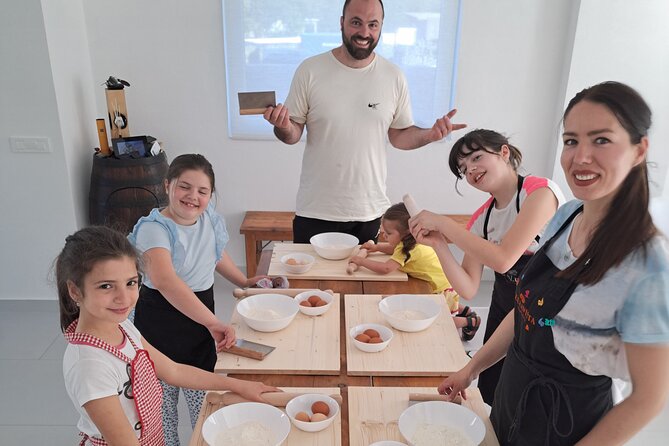
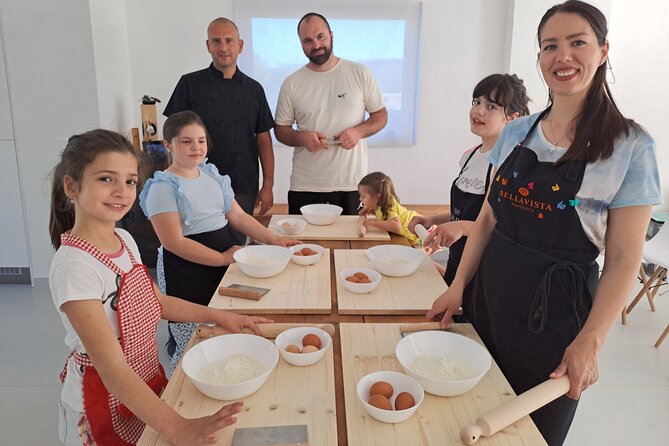
You’ll be welcomed at the villa to meet your Italian chef host and the others in your class. Even if you’re not a confident cook, this is the kind of setting where people are there to learn, not to judge. The hosts, including chef Giuseppe and Monika, lean into patience and conversation, which makes the whole thing feel human.
That’s one reason this class rates so well. You’re not just following steps; you’re getting real coaching in the kitchen. You’ll get answers as you go, especially around dough texture, how to handle rolling, and how to make sure pasta cooks right.
And because it’s a private group, you’re more likely to ask questions without feeling like you’re slowing anyone down. If you’re traveling solo, or you want a calmer activity than a crowded group tour, this setup is a big plus.
Your 3-Hour Flow: From Sauce to Shaped Pasta to a Table You Actually Enjoy
Here’s how the session runs, step-by-step, and what each part teaches you.
Step 1: Introductions and sauce prep
After you settle in, the chef explains what you’ll do. Then you assist on the preparation of the sauce that will be made and used for your pasta. That’s smart, because sauce is half the meal and it affects how you think about timing.
Ragù prep is its own world of flavors, and spinach-and-ricotta brings another kind of balance. Even if you don’t memorize every ingredient ratio, you’ll learn the workflow: how sauce gets built, how it smells as it develops, and what “ready” looks like in a real kitchen.
A possible drawback here: if you’re expecting to spend most of your time only touching dough, you should know there’s meaningful sauce time at the start. But honestly, that’s where you get the full experience.
Step 2: Dough work, then ravioli or tagliatelle
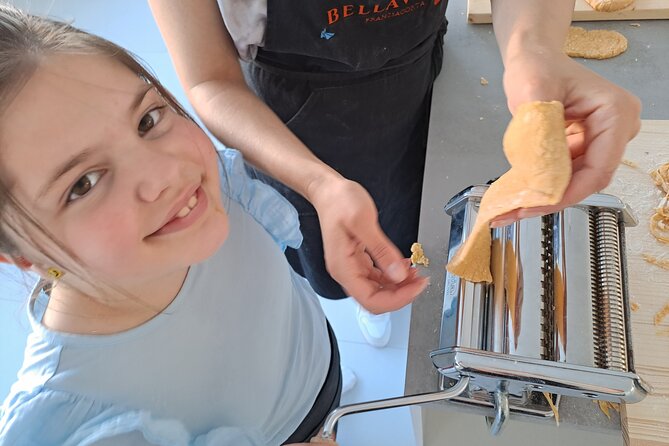
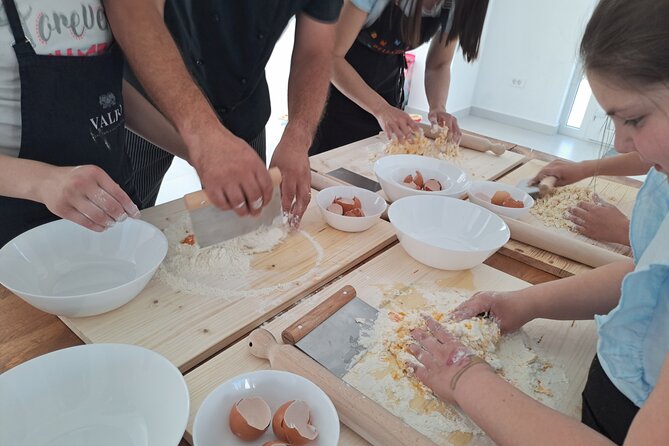
Once the sauce is ready, you move into the main craft: making your pasta. You’ll mix, roll, and cut your dough using food-safe cutting procedures. This is where the class turns from watching into doing.
Rolling dough teaches you about thickness and elasticity. Cutting teaches you consistency, which matters because pasta needs to cook evenly. And for ravioli, shaping is where you learn to control portions and seals so they don’t fall apart later.
Step 3: Cooking and the best part, eating it
After everything is prepped, pasta is cooked until it’s done right. Then it’s time to sit down, relax, and eat what you made. You’ll taste your handmade pasta with a glass of local Montenegrin wine.
This is one of those activities where the meal feels earned. You’re tasting the end result with the exact people who helped you build it, and that makes the food taste better than it would from a plate served to you in a restaurant.
The Dough Secrets You’ll Learn Without Feeling Examined
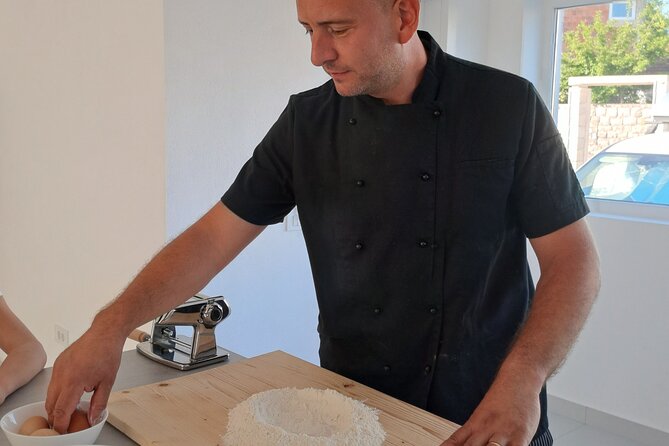
I like that this class focuses on technique you can repeat. You’re not just learning a recipe; you’re learning a feel.
Rolling: thickness you can trust
Dough can go wrong in two directions: too thick and it’s chewy, too thin and it cooks too fast. Rolling teaches you what the dough should feel like as you work it. You’ll get guidance on how to keep it workable and how to avoid overhandling.
Cutting: consistency for even cooking
Cutting and shaping aren’t about looking fancy. They’re about timing. Smaller or thicker pieces cook differently, so consistency helps your pasta come out with a better texture.
Handling: the “work with your hands” part
You’ll mix, roll, and cut, which means you’re building muscle memory. That’s why a printed recipe at the end matters. It gives you a reference point, but the real advantage is that your hands remember what to do next time.
And because the class mentions safe food cutting procedures, you can feel comfortable that the kitchen is set up for learning.
Sauce Pairing: Ragù and Spinach-Ricotta in Real Kitchen Context
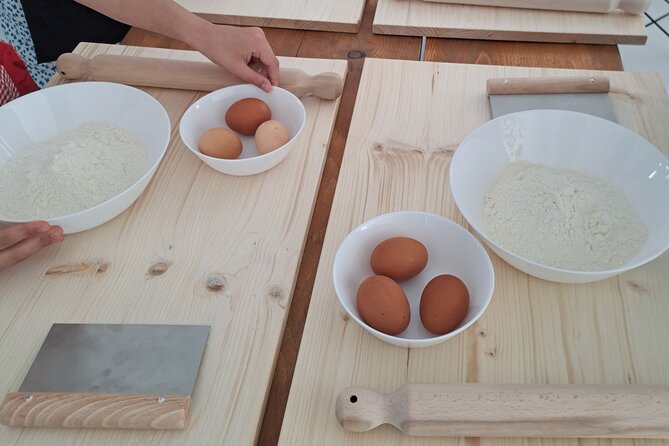
Sauce is where a pasta dish becomes a meal instead of a snack.
Tagliatelle + ragù (Bolognese-style)
Ragù is all about balance. You learn how the sauce gets prepared and how it’s explained by the chef. When you taste your tagliatelle, you’re tasting a system: dough texture plus sauce cling, with flavors designed to work together.
If you’ve ever thought about making ragù at home, this class gives you a starting point. Even if you tweak ingredients later, you’ll understand what to aim for.
Ravioli + spinach and ricotta
Spinach and ricotta is a filling that’s rich but lighter than heavy cheese. You learn how filling fits into ravioli structure, and you’ll taste how the filling behaves after cooking.
The advantage here is learning how to match filling density to pasta size. If the filling is too much for the pasta, it can leak. Too little, and you don’t get that satisfying bite.
Wine and the End-of-Class Recipe Takeaway
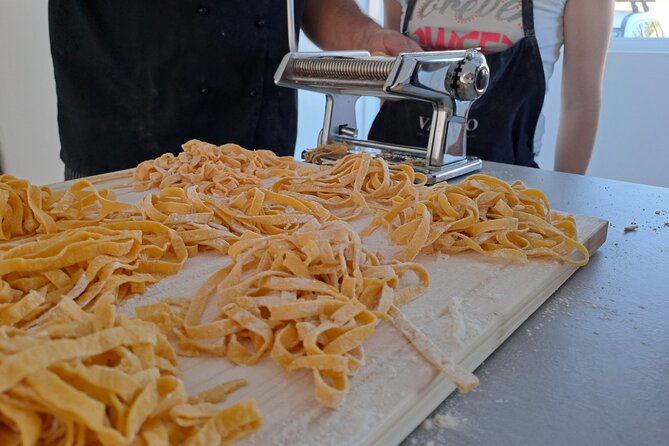
After your pasta is cooked, you’ll eat it with a glass of local Montenegrin wine. This is a nice touch because it turns the class into a full experience, not just a cooking lesson followed by something else.
Then you get a printed recipe of the handmade pasta. That matters because you’re leaving with more than memories. You have something you can reference when you’re back home, cooking on your own stove, translating what you learned into steps.
If you have dietary requirements or restrictions, you’re asked to advise at booking. That’s the right approach, because it gives the kitchen time to plan rather than improvising at the last second.
Price and Value: Is $51.59 a Good Deal?
At $51.59 per person, this pasta class sits in the “worth it if you’ll actually cook” category. Here’s why it can feel good value:
- You’re paying for three hours of guided instruction with an Italian chef host
- You make the pasta and the sauce, then you eat it at the end
- A glass of local Montenegrin wine is included with your tasting
- You receive a printed recipe, which increases the chance you’ll repeat the dish later
It’s not a bargain if you mainly want to watch and take photos. But if you want hands-on skills you can reuse, it’s a solid use of time in the Kotor area.
Also, it’s typically booked about 16 days in advance. That doesn’t mean it sells out instantly, but it does suggest demand. If you’re choosing between morning ravioli and afternoon tagliatelle, booking earlier helps you lock your preferred option.
Who Should Book This Pasta Workshop (And Who Might Skip It)
I’d point you here if you:
- want a food-focused activity that teaches real technique
- like the idea of cooking with a chef in a home-villa setting
- enjoy practical classes more than museum-style sightseeing
- travel with a small group (or want privacy and a calm pace)
You might consider skipping if you:
- only want a quick bite and don’t want a hands-on cooking session
- prefer structured restaurant dining over interactive learning
- don’t enjoy cooking, rolling, and shaping dough (because you’ll do a lot of it)
For families, couples, and solo travelers who like learning by doing, this class fits well. It also works nicely as a break from Kotor’s walking and sightseeing, since the day’s energy shifts into food craft.
Should You Book Pasta by Beppe in Kotor?
If you want a memorable, practical food experience in Montenegro, I think this is an easy yes. You get a real skill transfer—dough work plus sauce pairing—guided by chef Giuseppe and supported by Monika. You finish with a meal you made yourself, with wine, and you leave with a recipe in print.
Book it if you’re the type who remembers experiences best when your hands were involved. Skip it only if you’re looking for pure sightseeing or you dislike cooking tasks.
If you’re torn between options, choose based on your mood: ravioli for the filling-and-shaping challenge, tagliatelle for the ragù pairing and long-shape pasta craft.
FAQ
Where does the class start?
The meeting point is listed as 9MWM+5XJ, Đuraševići, Montenegro. The activity ends back at the meeting point.
How long is the handmade pasta cooking class?
It lasts about 3 hours (approx.).
Is this a private class or shared with others?
It’s a private tour/activity, so only your group will participate.
What pasta can I make in the morning?
You can prepare ravioli with spinach and ricotta cheese filling.
What pasta can I make in the afternoon?
You can prepare tagliatelle with ragù (Bolognese sauce).
Do we taste the pasta we make?
Yes. After cooking, you sit down together to taste your handmade pasta with a glass of local Montenegrin wine.
Do you provide a recipe to take home?
Yes. At the end of the course, participants receive a printed recipe of the handmade pasta.
Can the course accommodate dietary requirements?
If you have dietary requirements or restrictions, you should advise at time of booking.
Is there any food hygiene and safety certification mentioned?
Yes. The provider is HACCP Certified for Food Hygiene and Safety in 2023.
What is the cancellation policy?
You can cancel for a full refund up to 24 hours in advance of the experience’s start time. If you cancel less than 24 hours before, the amount paid is not refunded.
In a Kotor Kitchen
More Tour Reviews in Kotor



Kotor by Plate & Glass
Just in: more Kotor boats, walls and mountain roads
- Hiking Vrmac peninsula with panoramic view on Kotor bay
★ 5.0 · 3 reviews - Kotor walking tour and Jaz beach – private tour
★ 5.0 · 3 reviews - Kotor – Budva – Kotor tour with English speaking driver
★ 3.5 · 3 reviews - Transfer Portonovi / Herceg Novi to Dubrovnik Old Town
★ 5.0 · 3 reviews - Enjoy Private Transfers by Car or Van from Tivat Airport to Kotor or Budva
★ 5.0 · 3 reviews
Kotor Food & Wine Tasting Tours, compared.
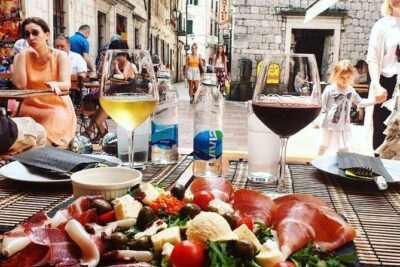 ★ 5.0Private Walking tour with Wine and FoodFrom $113197 reviews
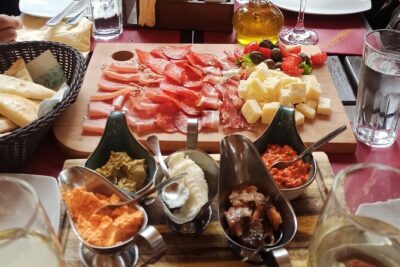 ★ 5.03 Hour Kotor Food Tour – Rick Steves’ RecommendedFrom $16846 reviews
 ★ 5.0Private tour: Homemade food and wine tasting at my family homeFrom $16739 reviews
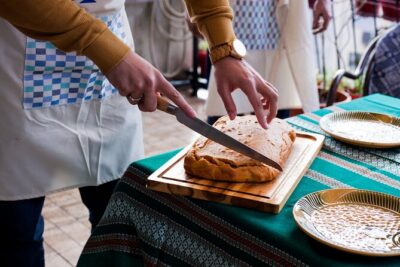 ★ 5.0Kotor private cooking class with lunch and Old town guided tourFrom $24835 reviews
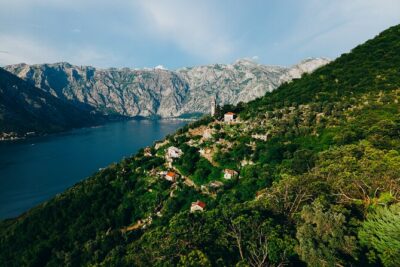 ★ 5.0Kotor Jeep Tour: Hidden Stone Village & Food TastingFrom $10134 reviews
 ★ 5.0Private National Park Lovcen with food and wine tastingFrom $21033 reviews
 ★ 5.0Food, wine and the best private walking tour of KotorFrom $10831 reviews
 ★ 5.0Unique gastro experience with locals in high hills above Budva!From $15628 reviews
Browse the lists this tour appears in